Independent rig evaluation — engineering decisions, not reports.
SC DrillTech reviews your solids-control, mud system and drilling-waste handling the way they should actually run — and hands you the decisions that cut dilution, barite and waste cost. Measured, not guessed. Vendor-neutral by design, with nothing to sell you but judgement.
26+ years in the fieldVendor-neutralGCC / MENA & worldwideAPI RP 13CEx-Halliburton · SLB · MI-SWACO · NOV
A complete, independent health-check of the rig's solids-control and mud system — the equipment, the settings, the cut points and the cost. You get a clear picture of how the system is really performing and exactly what to change, ranked by impact. This is the door most engagements start from.
Solids Control AuditMud System AuditDrilling Waste AuditCentrifuge ReviewPSD AssessmentShaker G-force TestVibration AnalysisOil on Cuttings
Two ways we run it
Remote evaluation Off-site
Built entirely from your data — daily solids-control reports, mud checks, rig hydraulics, centrifuge and screen logs and the fluids program. Fast, low-cost, and needs nobody on the rig.
Performance review and root-cause analysis on what the numbers actually show
Dilution, barite and low-gravity-solids trends rebuilt from the reports
Ranked corrective actions and equipment settings to change
It answers most "why is dilution, barite or torque so high" questions without a flight or a day rate — but it can only work with what can be reported. Anything that needs a physical reading on the equipment waits for the rig.
On-site evaluation On the rig
An engineer on the rig with instruments, taking the measurements no report can give you — first among them the shaker G-force test.
Shaker G-force test — an accelerometer on the basket reads the actual G-factor and motion the deck is developing
Vibratory-system analysis — linear vs elliptical motion, stroke, exciter synchronisation, out-of-balance, bearing and vibrator health
Live sampling, screen and cut-point verification, and a full walk-down of the solids-control and mud system
This is where assumptions become measured fact — and where the fixes a remote review can only suspect get confirmed and quantified.
Why the G-force test is on-site only. A shaker's nameplate promises one G-factor; what the basket is really developing after months of service — worn motor bearings, mismatched or shifted counterweights, a soft or cracked deck mount, wrong vibrator timing — is almost always different, and it drives conveyance, screen life and how dry the cuttings leave the deck. The only way to know the real number is to put an accelerometer on the deck and measure it. That is why the G-force and vibration work sits firmly in the on-site scope: it cannot be done from a report.
The deliverable is a decision package — baseline, findings, prioritised actions and the cost they move — not a 50-page report you'll never act on.
What we measure
Shaker G-force & motionon-site — the actual G-factor on the basket against design and what the screen and cut point need.
Vibratory system conditionon-site — motion type, stroke, frequency, exciter sync, out-of-balance, bearing and vibrator health.
Conveyance & screen performance — how G-force and motion translate into conveyance, screen life and dryness across the deck.
System health — removal efficiency, LGS load, equipment cut points, centrifuge KPIs and PSD across the train.
Most reviews stop at the cuttings dryer. A real DWM assessment looks at the whole waste chain — how cuttings are collected, conveyed, stored, transferred off the rig and finally disposed of — because that is where the hidden cost, the HSE exposure and the compliance risk actually sit. Few specialists cover it end-to-end; it is one of SC DrillTech's clearest advantages.
What we assess across the waste chain
Collection & conveyance — screw conveyors and augers off the shakers, mud cleaner, centrifuge and dryer: wear, flight damage, jamming and liquid backflow on inclined runs.
Cuttings transfer pumps — hydraulic S-valve pumps that move high-solids, abrasive cuttings over long distance and feed the dryer without backflow: capacity, line and hose wear, and whether they're the right call versus a screw conveyor.
Vacuum units — air-driven vacuum systems for tank bottoms, sumps, spills and viscous sludge: lift, duty cycle and where they belong in the layout.
Storage & transfer tanks (CSTs) — cuttings storage and transfer capacity at source, and whether it's throttling drilling speed.
Drying & dewatering — vertical cuttings dryer and high-G drying shaker recovery and discharge dryness, plus dewatering-unit performance on fine (sub-5-micron) solids.
Oil on cuttings (OOC) — retained oil on the discharged cuttings, measured by retort against the discharge limit that applies to your region: the single number that decides whether the waste can be discharged, must be treated further, or has to go to shore — and the one that drives both compliance and disposal cost.
Disposal routes we evaluate
Skip & ship — skip filling, crane lifts, vessel logistics and weather windows: the simple route, but the one most exposed to deck space, lifting risk and downtime.
Bulk transfer — pumping cuttings from rig CSTs to vessel CSTs: fewer crane lifts, faster turnaround and lower HSE exposure than skips.
Cuttings re-injection (CRI) — where annular injection is viable, and what it takes to run it safely.
At-source thermal (TCC / TDU) — rig-based thermal desorption that recovers base oil and cuts transport: where it pays, and where it doesn't.
Why this is the edge. Oil-on-cuttings limits, disposal cost and vessel logistics are where DWM quietly bleeds money and risk. An independent assessment of the full chain — not just the dryer — routinely surfaces savings and compliance gaps the equipment vendors never raise.
Independent support for anyone who carries the performance — or the cost — of the solids-control and fluids system, onshore or offshore.
Drilling contractorsOperatorsMud & fluids companiesRental & service companiesTender & procurement teams
How we work
Desktop & data review
We start from your reports, rig data and fluid program — the picture before anyone steps on the rig.
Remote or on-site assessment
Remote troubleshooting and performance review, or a focused site visit and sampling where the question needs it.
The decision package
You get the verdict, the ranked actions and the cost they move — written to be acted on, not filed.
What you walk away with
A measured baseline of how the system performs today — fact, not opinion.
Findings ranked by impact and by the cost they move.
Specific settings and equipment changes — what to do, and in what order.
The cost each change moves: dilution, barite, waste disposal and equipment spend.
A short executive summary you can put straight in front of management.
Performance analysis reports, OOC & ROC — oil-on-cuttings and return-on-cost figures that put a compliance and a money number on every recommended change, so the decision is justified, not asserted.
Independent by design
SC DrillTech sells judgement, not equipment. There is no package to push and no vendor to protect, so the recommendation is the one your rig actually needs. Every engagement is handled confidentially, and the work draws on 26+ years of solids-control and drilling-waste experience across the GCC, MENA and beyond.
Common questions
Do you have to be on the rig?
No. Most evaluations start remotely from your reports and data. Only physical measurements — chiefly the shaker G-force and vibration test — need an on-site visit.
What exactly is the shaker G-force test?
An accelerometer placed on the shaker basket measures the actual G-factor and motion the deck is developing against its design. No report can show it, which is why it is done on-site.
Are you independent from equipment vendors?
Yes. SC DrillTech sells engineering judgement, not equipment. There is no package to push, so the recommendation is the one your rig actually needs.
Is our data kept confidential?
Yes. Every engagement is handled in strict confidence. Nothing is shared or attributed to you.
What do we actually receive?
A decision package: a measured baseline, findings ranked by impact, specific actions and the cost they move — written to be acted on, not filed.
How do we get started?
Tell us what the system is doing — the dilution, the torque, the screens, the cost. We scope it, run it remote or on-site, and hand back the decisions. Request an evaluation →
The complete service line
Every SC DrillTech service — on site or remote. Pick one to send a request; the form opens with your choice pre-selected.
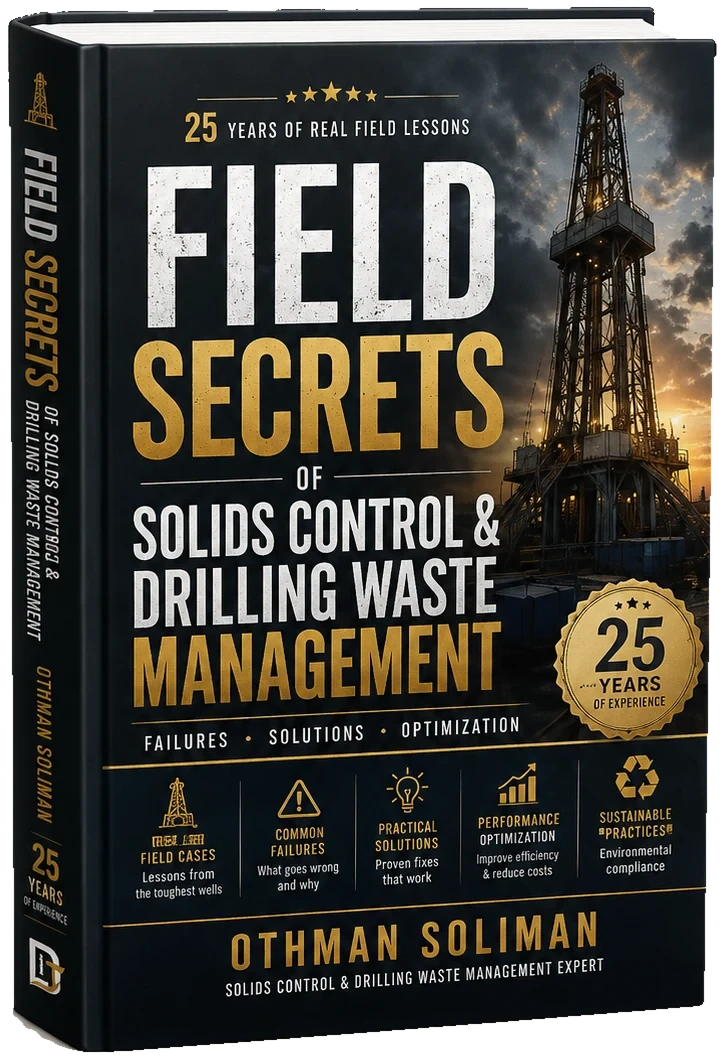
New here? Start with the book. Field Secrets — 262-page field manual, 54 chapters. Get the book →
Facing this on your rig?
Tell us what the system is doing — the dilution, the torque, the screens, the cost — and we'll tell you what we'd evaluate and what it would change. No sales pitch, just a measured engineering view.