SC DRILLTECH · FAILURE GALLERY
What failure looks like inside the machine.
Every common solids-control failure, drawn in cross-section the way it actually happens on the rig — each one linked straight to the field fix.
Decanting centrifuge failures
Equipment guide →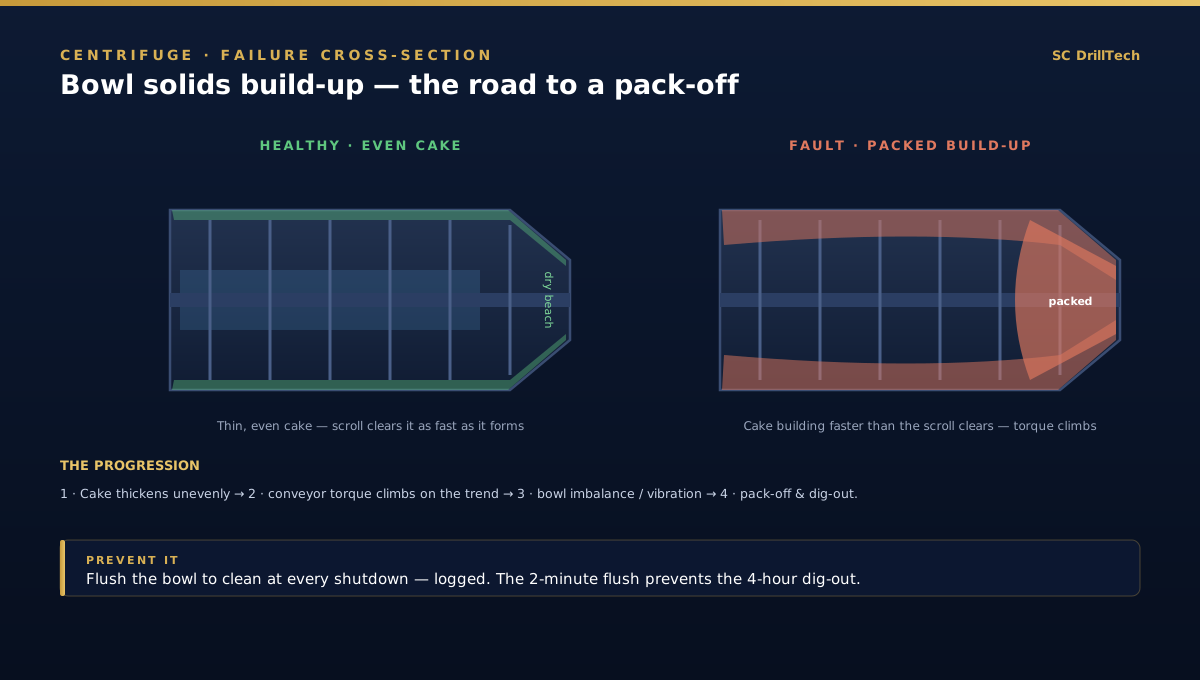
Bowl solids build-up
ACTTorque baseline creeping up shift over shift; vibration after restart.
Cake accumulating faster than the scroll clears it — usually a missed flush at shutdown.
The precursor to every pack-off, torque trip and dig-out.
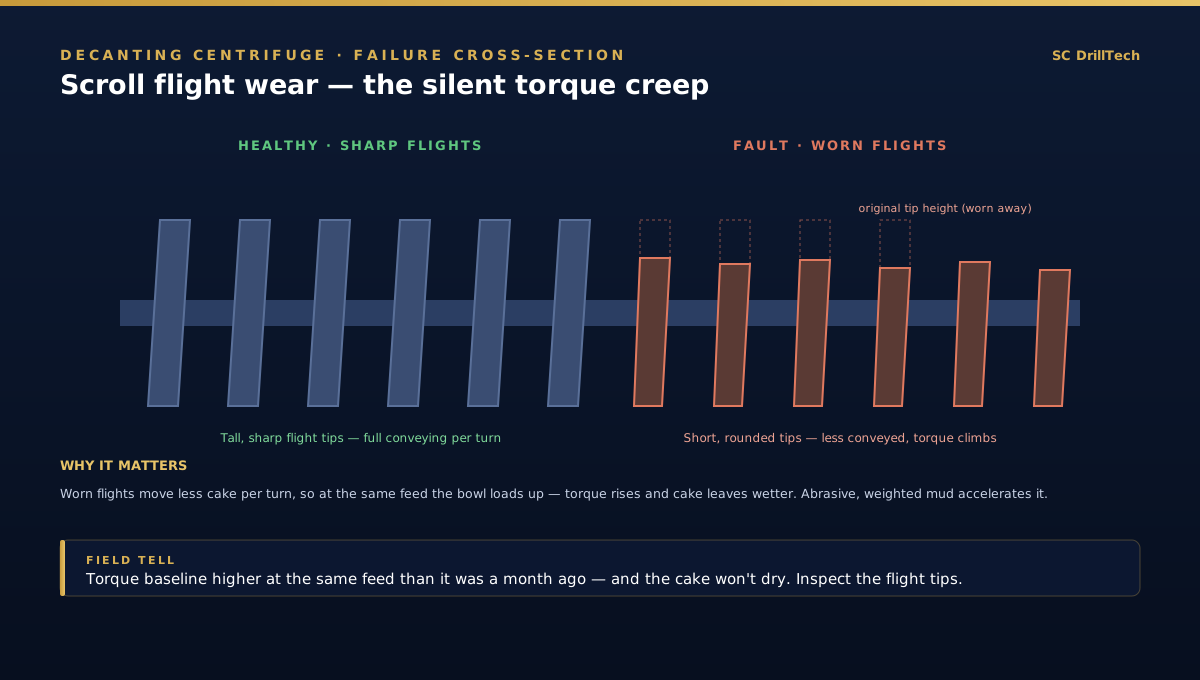
Scroll flight wear
SCHEDULEDHigher torque at the same feed than a month ago; cake won't dry.
Abrasive solids erode the flight tips, so each turn conveys less cake.
Rising torque and wet discard — lost recovery and run-time.
Bearing damage
STOPConstant high vibration on a clean, empty bowl; heat/noise at a housing.
Lubrication failure or wear on a heavily loaded high-speed bearing.
Catastrophic failure in minutes if run through — a lock-out.
Wet solids
MONITORSloppy, smearing cake instead of dry, crumbling discharge.
Pond too deep, feed too fast, or G below the dewatering duty.
Recoverable fluid leaving with the discard — dilution climbs.
Shale shaker failures
Equipment guide →
Screen blinding
ACTDeck flooding while panels look packed (not holed).
Near-size particles lodge in the openings and plug the mesh.
Fine solids bypass the cheapest removal stage — dilution rises.
Screen failure (holed / torn)
ACTLGS / sand rising while the shaker looks normal.
Improper tensioning, worn deck rubbers, or shock loading tears the cloth.
Quiet bypass of unscreened solids — loads the whole train.
Wet cuttings / flooding
ACTFluid carried over the discharge end; no defined beach.
Screen too fine for the load, mismanaged pool, or uneven feed.
Whole mud lost over the end — direct fluid loss + waste.
Solids bypassing the screen
ACTLGS climbing with the shaker apparently fine.
A path around the mesh — failed gasket, holed panel, or open bypass gate.
Unscreened solids enter the active system invisibly.
Hydrocyclone failures
Equipment guide →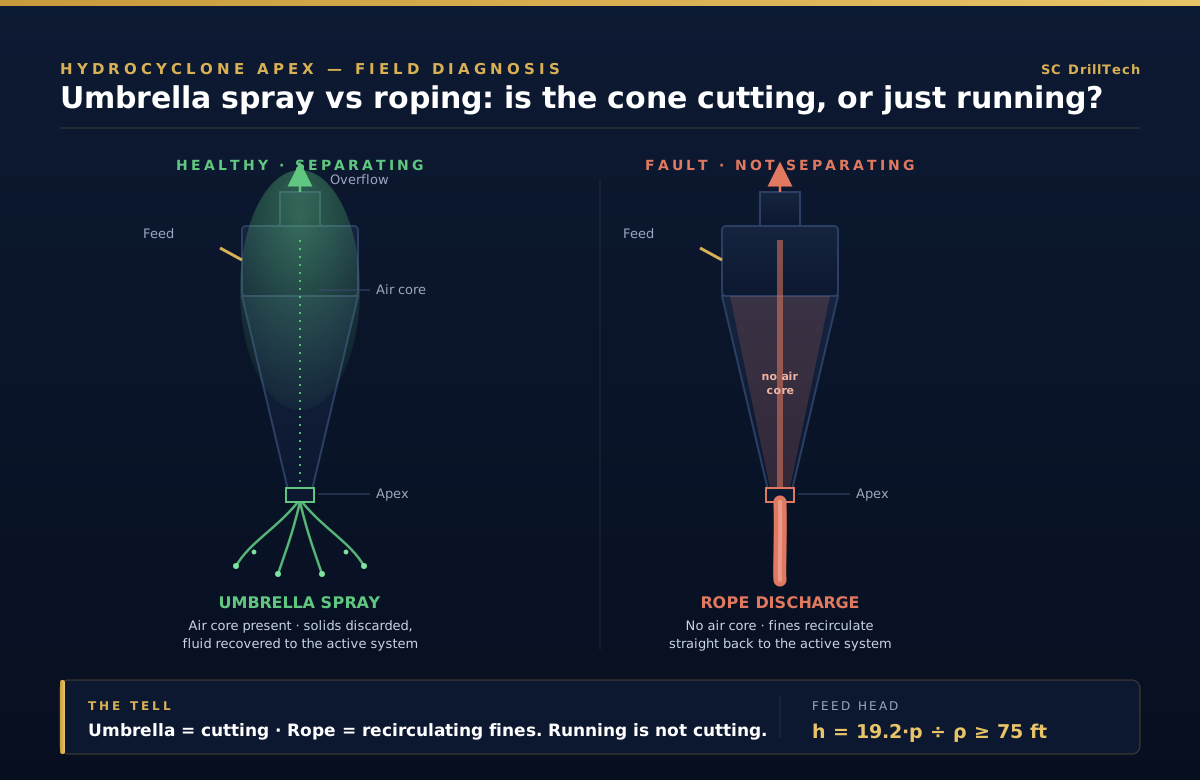
Cone roping
ACTApex discharging a solid rope, no air core; manifold pressure low.
Low feed head — usually a worn feed-pump impeller — or an overloaded apex.
Fines recirculate for a whole section — the cone isn't cutting.
Cone plugging
ACTA dry, silent apex — no discharge from one or more cones.
Apex too small, or trash / LCM with no protective screen upstream.
Dead cones send their fines straight back to the mud.
Apex wear / low underflow
MONITORThin, watery apex discharge carrying little solids.
Worn-open apex under-classifies, or marginal feed head.
Cones spray but remove little — LGS creeps up.
Mud system failures
Equipment guide →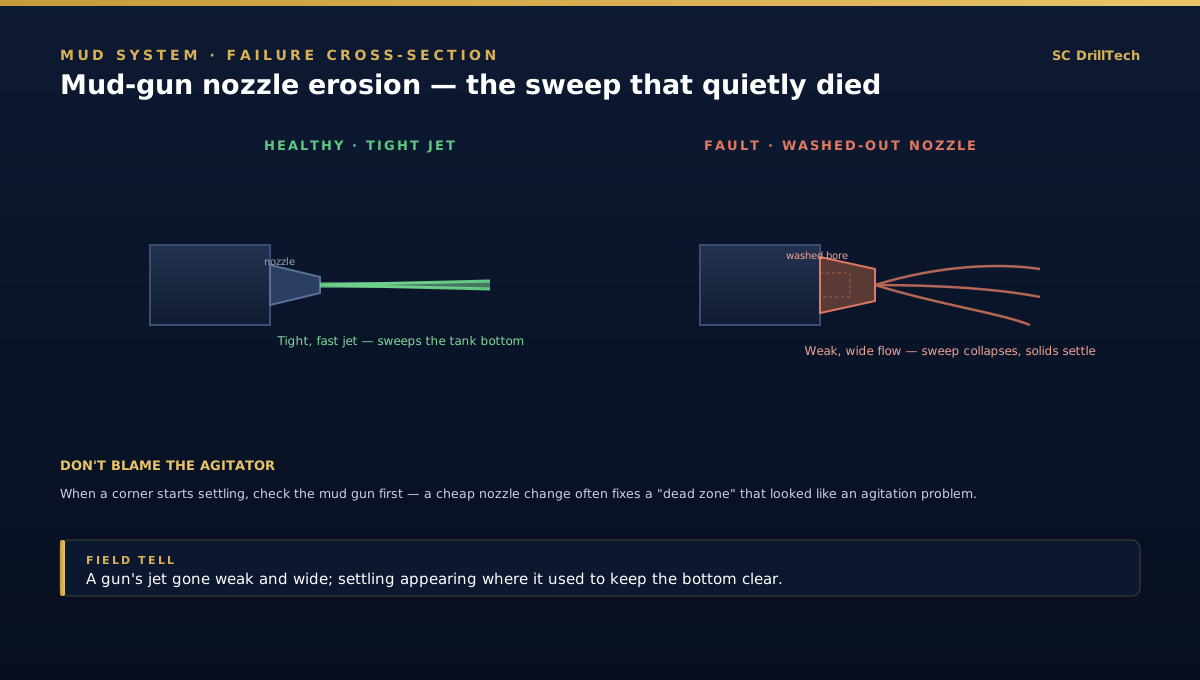
Mud-gun nozzle erosion
MONITORA gun's jet gone weak and wide; settling where it used to sweep.
Abrasive solids at high velocity wash out the nozzle bore.
Lost agitation — dead zones form and solids settle.
Agitator blade wear
MONITORSettling despite the agitator running; weak surface pattern.
Abrasive wear thins the impeller blades, so they move less mud.
Failing suspension — barite-sag risk on weighted mud.
Tank dead zones
MONITORSolids bed in corners; properties differ before / after stirring.
Agitator / gun coverage leaving corners unswept.
Lost active volume; solids re-suspend as a slug.
Built from the field, drawn for clarity
These are engineering illustrations of real failure modes — accurate to the mechanism, owned by SC DrillTech, and consistent across the library. Seeing a failure on your rig? Request a remote evaluation.
Seeing one of these on your rig?
Send your shift data — we read it against API RP 13C and tell you exactly what to change.
Request a remote evaluation →