 SC DrillTech
Thermal desorption vs cuttings reinjection: clean it or bury it

Once cuttings are as dry as mechanical equipment can make them, a non-aqueous stream still has to go somewhere. Two technologies dominate the decision — thermal desorption and cuttings reinjection — and they solve opposite problems. This week: how each works, what each costs, and the conditions that make one the obvious answer and the other a mistake.
Two answers to the same question
After the cuttings dryer and centrifuge have recovered what they can, oily cuttings still carry residual base fluid and cannot simply be dumped. The two mature routes are fundamentally different in philosophy: thermal desorption cleans the cuttings so the solids and oil can each be reused or safely handled, while cuttings reinjection makes the cuttings disappear underground without cleaning them at all. Choosing between them is not about which is "better" — it is about which problem you are solving.
Thermal desorption — clean the stream
Thermal desorption units (including thermomechanical designs such as TCC, which generate heat by friction rather than a flame) heat the cuttings until the hydrocarbons vaporise, then condense and recover the base oil while leaving dry, low-oil solids — routinely below 1%, often below 0.1%. Its strengths and costs:
- Recovers base oil — valuable fluid goes back to use rather than into the ground, a real offset on expensive synthetics.
- Produces clean solids — the treated solids can be discharged (where permitted), landfilled or reused.
- Energy-intensive and space-hungry — it needs power, footprint and management, which limits deployment on small offshore decks.
Thermal wins where base-oil recovery is economically worthwhile, where clean solids are required for discharge or reuse, and where there is room and power — onshore sites, large platforms, and centralised treatment.
Cuttings reinjection — make it disappear
Cuttings reinjection (CRI) grinds cuttings and associated waste into a pumpable slurry and injects it into a dedicated disposal formation — a fracture below the surface casing or a depleted zone — so nothing is discharged or hauled. Its strengths and costs:
- True zero surface discharge — the waste never enters the sea or a landfill, which is decisive in sensitive or zero-discharge regimes.
- Eliminates haul-off — no boats, skips or trucking, a large saving in remote and deepwater operations where logistics dominate cost.
- Demands the right geology and disciplined injection — a suitable receiving formation, a competent injection well, and careful fracture and pressure management. Get it wrong and you risk fracture propagation, broaching to surface or well-integrity problems.
CRI wins where discharge is prohibited and haul-off is expensive or impractical — remote locations, deepwater, and environmentally sensitive areas — provided the subsurface can safely take the slurry.
How to choose
Choose thermal desorption when: base-oil recovery pays, clean solids are needed for discharge or reuse, and space/power exist (onshore, large platforms, central plants).
Choose cuttings reinjection when: zero surface discharge is required, haul-off is costly or impossible, and a suitable, well-characterised injection formation and competent well are available (deepwater, remote, sensitive areas).
Warning signs you chose wrong: running CRI without confirmed fracture containment; or hauling thermal residue a long distance when a qualified injection zone sat under the rig; or buying a thermal unit for a small deck with no power margin.
The economics behind the choice
The decision usually comes down to two costs the field can actually measure: the value of the base oil recovered (favours thermal) and the cost of logistics to move waste off location (favours reinjection). On an expensive synthetic with easy shore access, recovering base oil thermally can pay for itself. On a remote deepwater well with costly boats and a good disposal formation, reinjection removes the logistics bill entirely. Increasingly, operators run both in a strategy: dry and recover what is cheap to recover, reinject or thermally treat the rest according to location.
The takeaway
Thermal desorption and cuttings reinjection are not competitors to rank — they are answers to different questions. Thermal cleans the stream and recovers the oil; reinjection makes the stream vanish underground. Pick thermal when recovery and clean solids pay and you have space and power; pick reinjection when zero discharge and logistics dominate and the geology cooperates. Match the technology to the location, the fluid value and the regulation — not to habit or to whatever is already on the yard.
Educational field guidance based on standard drilling-waste-management practice. Technology suitability depends on location, geology, fluid and regulation — verify against a site-specific waste plan and the relevant authority before acting.
This brief is the field summary. For the full reference, see:
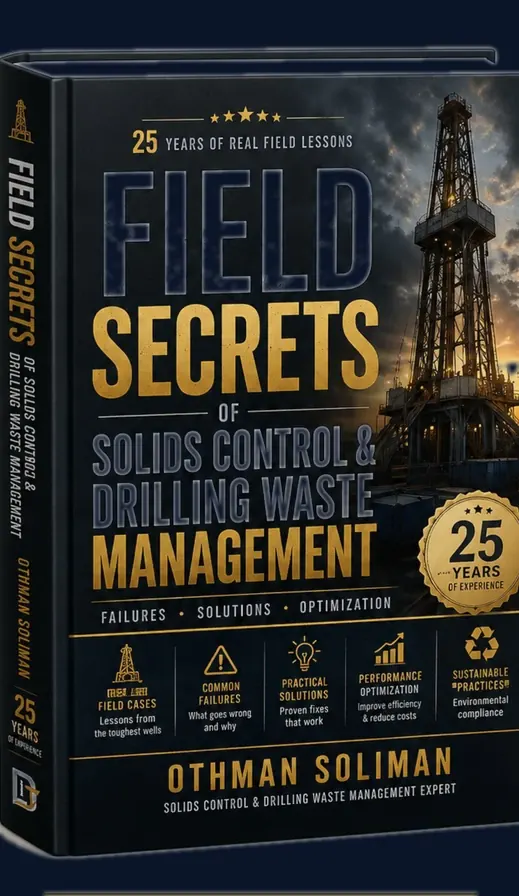
Every SC DrillTech tool, in one bundle
- Field Secrets — the manual
- SC DrillTech Doctor — diagnostics
- FluidPro Suite — mud & fluids
- DrillTech ROC — cost & cuttings
- Training Series — decks & exams
- Every calculator in this brief

Prefer the live platform? Meet Rig IQ
Run every calculation in this series on your own rig data — dashboards, PSD, audits and reports, all in one place.
Explore Rig IQ →Subscribe to SC DrillTech Weekly
One field-tested technical brief in your inbox every week — no spam, one-click unsubscribe.
Subscribe free →Know an engineer who’d want this? Forward this to a colleague →