 SC DrillTech
Closed-loop and zero-discharge: the end of the reserve pit

The old model — dig a reserve pit, dump the waste, walk away — is being regulated and engineered out of existence. Its replacement is the closed-loop, zero-discharge system: no pit, nothing released, every stream contained, measured and routed. This week: what closed-loop really means, the drivers pushing it worldwide, and what it demands from the solids-control engineer.
What "closed-loop" actually means
A closed-loop (or pitless) system eliminates the earthen reserve pit entirely. Instead of letting cuttings and fluid settle in an open hole in the ground, every stream is captured in steel tanks, processed by the solids-control train, and routed to a defined destination — reused, hauled, treated or reinjected. Zero discharge goes one step further: nothing liquid or solid is released to the surface environment at all. The two ideas travel together, and they turn waste handling from a passive "let it settle" activity into an active, engineered, fully-accounted process.
Why it is happening now
Three forces are closing the pits at the same time:
- Regulation — rules such as the recent overhaul of oilfield-waste handling in Texas (Chapter 4), tightening reuse and disposal expectations in Alberta and the North Sea, and outright zero-discharge regimes in sensitive regions are removing the legal option to pit-and-abandon.
- Cost and land — pit construction, closure and remediation, plus the liability of contaminated ground, often cost more than containment once the full lifecycle is counted.
- ESG and reputation — operators are judged on discharge and footprint; a visible reserve pit is a liability on more than one balance sheet.
What it demands from solids control
Closed-loop puts the solids-control train at the centre of the operation, because there is no pit to hide inefficiency. Everything the equipment fails to remove stays in the system or must be hauled at cost. In practice that means:
- A train sized to keep up — shakers, cyclones and centrifuge that actually hold LGS at target, because dilution now has nowhere cheap to go.
- Dewatering — chemically-enhanced centrifugation that splits water-based waste into clean(er) water for reuse and a dry, stackable solid, shrinking the hauled volume.
- Containment and transfer — tanks, cuttings boxes and pumps instead of a pit, with no leaks and full custody of every barrel.
- Measurement — because a closed system must be accounted for end to end (which is next week's topic).
The payoff
Closed-loop is often sold as a compliance cost, but it pays back in ways the field can measure: less mud dumped and rebuilt, less volume hauled and disposed, base fluid and water recovered for reuse, and no pit-closure or remediation liability at the end. A well-run closed-loop location routinely cuts total waste volume dramatically compared with a pit operation — the same barrels of drilled solids, far fewer barrels of everything else.
A field example
An operator moving from reserve pits to a closed-loop system on a pad of wells adds tank containment, a dewatering unit and disciplined solids-control operation. The reserve pit — and its construction, lining, closure and remediation — disappears from the budget. Water-based waste is dewatered: the recovered water is reused on the next well, and only a dry solid is hauled. Total hauled volume falls sharply, mud is preserved rather than dumped, and the location has no open pit to remediate. The upfront equipment cost is offset within the pad by lower disposal, lower mud spend and eliminated closure liability.
The takeaway
The reserve pit is ending — pushed out by regulation, cost and reputation — and the closed-loop, zero-discharge location is taking its place. That shift moves the solids-control engineer from a supporting role to the centre of the operation: with no pit to absorb mistakes, the performance of the separation and dewatering train is the waste plan. Contain everything, dewater what you can, recover what has value, and account for the rest. Engineered containment, not a hole in the ground.
Educational field guidance based on current drilling-waste-management practice and regulation. Requirements vary by jurisdiction and location — verify against your site-specific waste plan and the applicable authority before acting.
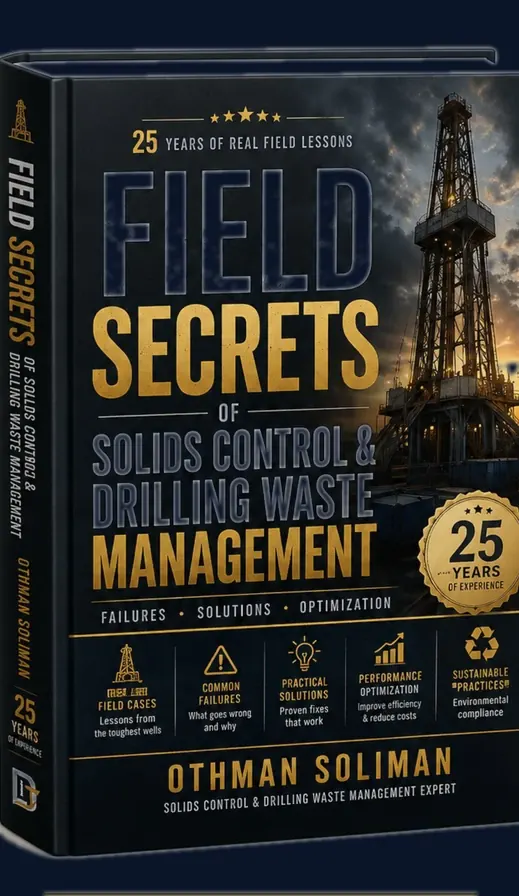
This brief is the field summary. For the full reference, see:
Every SC DrillTech tool, in one bundle
- Field Secrets — the manual
- SC DrillTech Doctor — diagnostics
- FluidPro Suite — mud & fluids
- DrillTech ROC — cost & cuttings
- Training Series — decks & exams
- Every calculator in this brief

Prefer the live platform? Meet Rig IQ
Run every calculation in this series on your own rig data — dashboards, PSD, audits and reports, all in one place.
Explore Rig IQ →Subscribe to SC DrillTech Weekly
One field-tested technical brief in your inbox every week — no spam, one-click unsubscribe.
Subscribe free →Know an engineer who’d want this? Forward this to a colleague →